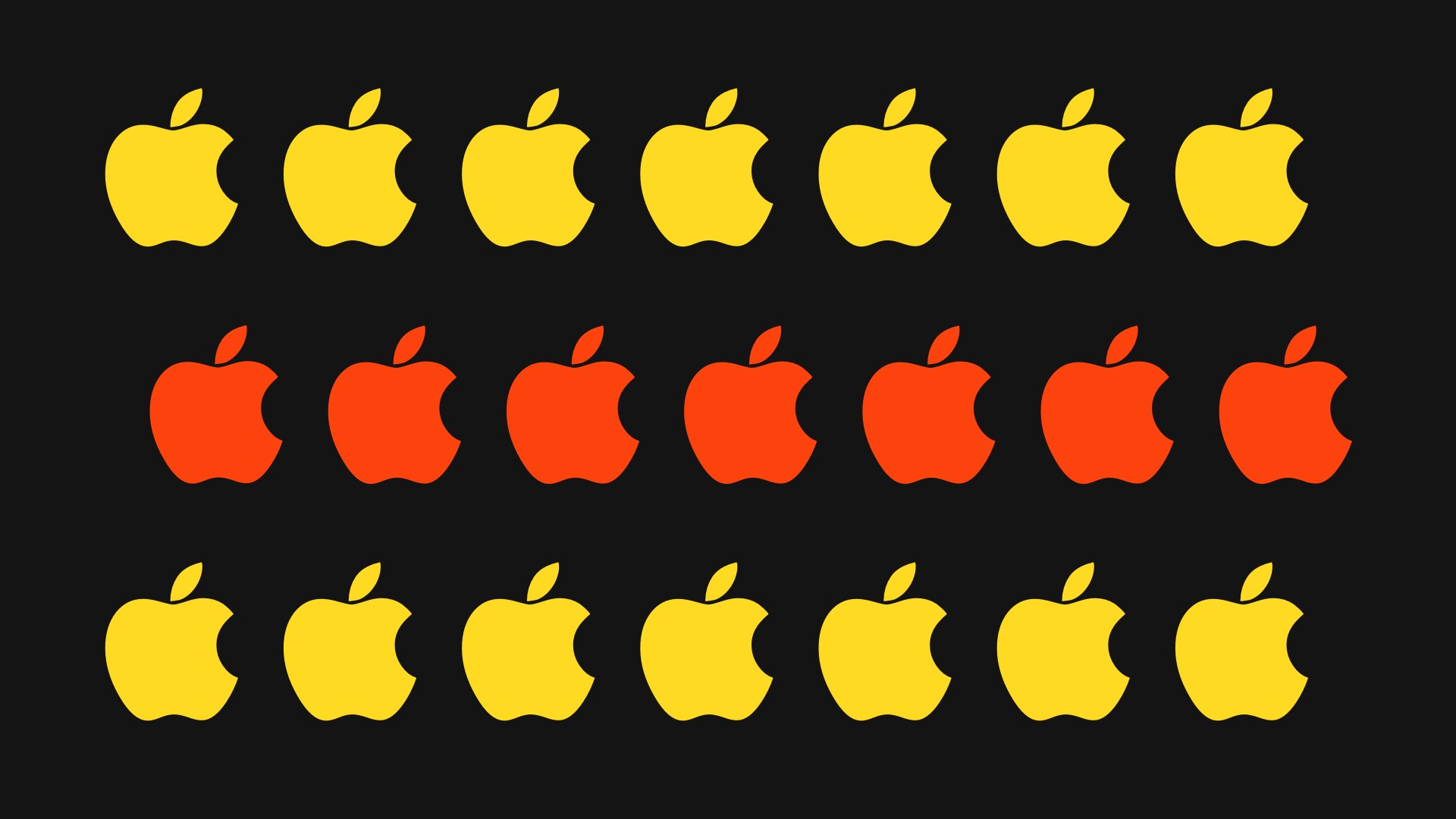
The sobering global statistics on adult IT literacy within the OECD
Design fails when experts mistake themselves for users and ignore the technology familiarity gap.

“We know this solution is more usable based on the feedback the usability tests provides us with but it’s just a bit boring” was the heartbreaking feedback the agency received from their client. “There’s no way our users wouldn’t know what that interface control means.”
You might think that the arrogance of speaking on behalf of users without ever having met one (or worse still, ignoring user feedback if it doesn’t suit) represents a luxuriant hubris for the tiny minority of organisations so successful and with such desirable products that their users will take what they are given. However, this author’s experience suggests that this outlook is more prevalent than it should be, based on what we know about the close relationship between how organisations treat their customers online and commercial success.
The inestimable Jakob Nielsen states that the single most expensive lesson digitally un-transformed companies have to learn is how different their users are to them.
I am some distance from reaching the heady heights of global authority enjoyed by Nielsen, but I have been involved in digital for 2 decades, made a living from design for 15 years and have earned my keep from UX exclusively for 6. With every passing day, I am increasingly convinced that Neilsen is completely correct.
Let’s contrast the world of most digital designers with the world of their users by looking at the result of the largest usability study ever conducted.
Many of us old–timers in the digital industry have been around enough corners to have seen too many designs which designers have designed for designers.
Between 2011 and 2015 the Organisation for Economic Co-operation and Development (OECD) collected data from 33 industrialised countries. The data included tests from over 215,000 people with at least 5,000 people tested in each county. Published in 2016, the report aimed to test the computer skills of people aged 16–65 by asking them to complete 14 tasks, of increasing levels of difficulty.
Its findings are summarised below:
14% of adults tested could only complete a level 1 task, such as deleting an email message
another 29% of adults tested could complete a level 2 task, such as finding an email from a specific contact
a further 26% of adults tested could complete a level 3 task, such as finding a specific document in an email from a specific contact
the final 5% of adults could be deemed expert level computer users
Critically, 25% of users were deemed unable to use a computer at all, with the general difficulty of software and usability challenges cited as a key reason.
And none of this even starts to consider the 10%+ of most OECD populations who have a physical or other impairment which negatively affects their ability to use computers.
When it comes to designers, in 20+ years in the industry, I have yet to meet one who doesn’t fall into the 5% expert-level category.
When we interpret “There’s no way our users wouldn’t know what that interface control means” through this lens, what it really means is that the designers friends and colleagues in the cosy 5% know what the interface control means. It casts the spotlight on the sad truth that “our users would never…” usually means “I would never…” or “my colleagues would never…” and frankly that’s not good enough.
Culturally challenging this malignant mindset was high on the agenda of the GDS team in the UK a decade ago when they started the gov.uk project. Understanding the users they were serving was at the heart of everything they did and continue to do. In a recent report they published that every 100 times a public service is accessed in the UK, 77.9 of those times it is accessed online. People are no longer posting letters, filling in forms, going to Post Offices or spending hours on the phone. Users across levels 1, 2 and 3 and into expert are feeling confident and empowered because GDS recognise that that everyone in their organisation serves the user.
Many of us old-timers in the digital industry have been around enough corners to have seen too many designs which designers have designed for designers.
And it’s difficult to think of a more condemning description of a design.
Designers – you don’t own the design. It’s not for you. It’s not for your colleagues. It’s not for your boss. It’s not for awards judges.
It’s for the people who are the reason you have a job – your users – across all levels of ability and disability – relying on the quality of your work to solve real problems in the real world.